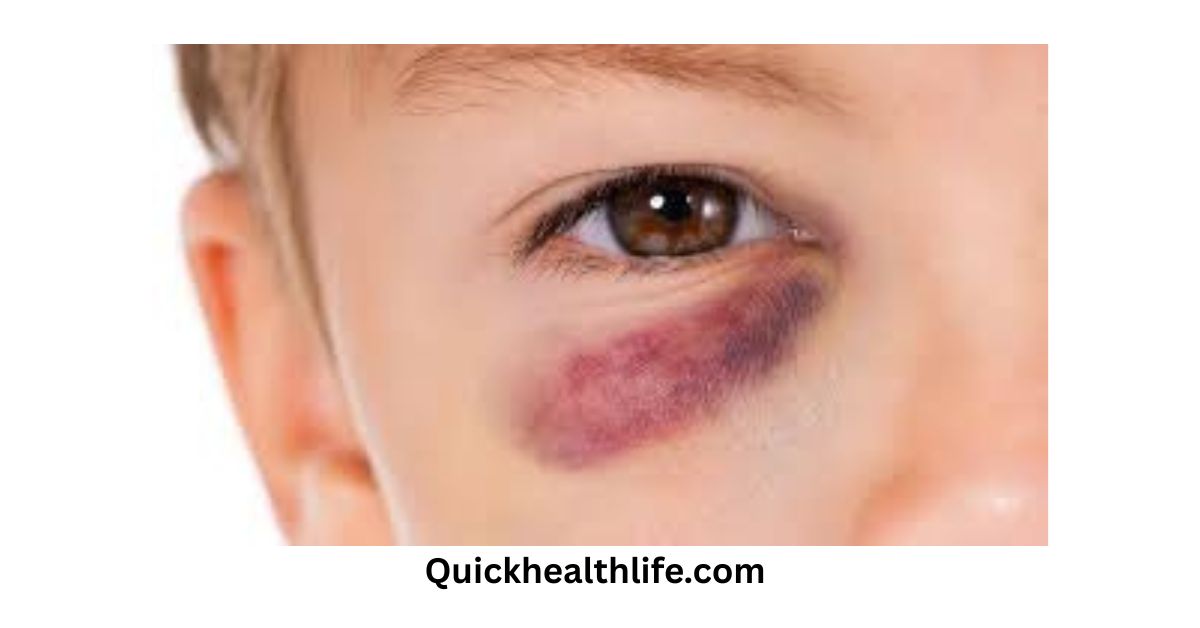
A black eye, also called a periorbital hematoma, happens when the skin around your eye becomes dark, swollen, and bruised due to bleeding under the skin. Most people think a black eye always comes from a punch or fall — but that’s not always true. Sometimes, it can occur even without an injury, due to underlying medical conditions or facial surgeries.
What Is a Black Eye?
A black eye is a bruise that forms around the eye when tiny blood vessels under the skin break and leak blood into the surrounding tissue. The dark color appears because of this trapped blood and the body’s natural healing process.
Other Names for Black Eye
- Periorbital hematoma
- Eye bruise
- Shiner (common term)
Table of Contents
Black Eye Anatomy: What’s Happening Under the Skin?
The skin around your eye is soft and thin, and it lies above fat pads and muscles. When an impact occurs, blood vessels break, and blood collects between the skin and underlying tissues. Since this area has loose skin, the swelling and discoloration spread easily, making the bruise more noticeable.
The color changes you see — from red to purple, blue, green, and yellow — happen as the body breaks down the blood cells and heals.
Symptoms of a Black Eye
A black eye is usually easy to recognize. Common symptoms include:
- Dark discoloration (blue, purple, or black) around the eye
- Swelling and puffiness of the eyelid and cheek
- Pain or tenderness around the affected area
- Blurry vision (sometimes)
- Difficulty opening the eye due to swelling
- Redness in the white of the eye (subconjunctival hemorrhage)
In most cases, both the bruise and swelling fade within 1 to 2 weeks.
Causes of a Black Eye
While the most common cause is trauma, there are many other possible reasons.
1. Direct Injury
A hit, fall, or accident is the most frequent reason for a black eye. Sports injuries, fights, or even minor bumps can cause the area to bruise.
2. Surgical Procedures
Facial surgeries such as nose surgery (rhinoplasty) or jaw surgery may lead to temporary black eyes due to pressure or bleeding under the skin.
3. Sinus Infections or Allergies
Severe sinus congestion or allergies can lead to swelling and discoloration around the eyes, giving a “black eye” appearance without injury.
4. Skull or Facial Fractures
A fracture at the base of the skull (basilar fracture) can cause black eyes on both sides — known as “raccoon eyes.” This is a medical emergency.
5. Dental Problems
Sometimes, tooth abscesses or dental infections can cause swelling that spreads to the eye area.
6. Sudden Black Eye Without Injury
When a black eye appears without any trauma, it might indicate:
- High blood pressure
- Bleeding disorders
- Side effects of blood-thinning medication
- Sinus infections or nasal congestion
- Allergic reactions
If you get a sudden black eye without an injury, it’s best to see a doctor immediately.
Types of Black Eye
- Minor Black Eye:
Caused by mild injury. It heals within a few days with home treatment. - Severe Black Eye:
Includes heavy swelling, deep bruising, or vision issues. May indicate a fracture or eye damage. - Double Black Eye (Raccoon Eyes):
Usually due to a skull fracture or severe head injury. Requires urgent medical care.
Diagnosis: How Doctors Examine a Black Eye
Most black eyes are diagnosed through physical examination. However, if the cause is unclear or symptoms are severe, your doctor may recommend tests such as:
- CT scan or X-ray: To check for fractures or internal bleeding.
- Eye examination: To rule out retinal damage or bleeding inside the eye.
- Blood tests: If bruising happens frequently or without injury.
When to Worry About a Black Eye
While most black eyes heal naturally, you should seek medical help immediately if you notice:
- Blood inside the eye (hyphema)
- Double vision or blurred vision
- Persistent headache or nausea
- Bleeding from the nose or ears
- Severe swelling that closes the eye
- Both eyes turning black (raccoon eyes)
These signs may point to a fracture, brain injury, or internal bleeding, which need emergency care.
How to Treat a Black Eye
The treatment depends on the cause and severity. Let’s look at both home remedies and medical options.
Home Remedies for a Black Eye
1. Apply a Cold Compress
Use a cold pack or wrapped ice cubes on the area for 10–15 minutes every hour during the first 24–48 hours.
Why it helps: Reduces swelling and prevents further bleeding under the skin.
2. Switch to Warm Compress After 2 Days
After two days, apply a warm cloth for 10 minutes several times a day.
Why it helps: Improves blood circulation and speeds up healing.
3. Elevate Your Head
Keep your head raised, especially while sleeping, to minimize swelling.
4. Gentle Massage (After a Few Days)
Once swelling goes down, lightly massage the area to promote healing — but only if it’s not painful.
5. Stay Hydrated and Eat Vitamin-Rich Foods
Vitamin C, Vitamin K, and protein-rich foods help repair damaged tissues faster.
Medical Treatment for a Black Eye
If the injury is serious, your doctor might recommend:
- Painkillers: To reduce discomfort (avoid aspirin as it increases bleeding).
- Antibiotics: If infection or open wounds are present.
- Drainage: If there’s fluid buildup.
- Surgery: In rare cases of bone fracture or internal bleeding.
How to Get Rid of a Black Eye in 30 Minutes (Myth vs. Reality)
Many people search for quick fixes like “how to get rid of a black eye in 30 minutes,” but unfortunately, no home remedy can completely remove it that fast. The bruise needs time to heal naturally.
However, you can reduce swelling and discoloration quickly by:
- Applying a cold compress immediately after injury.
- Using concealer makeup to hide discoloration.
- Applying aloe vera gel or witch hazel for faster healing.
How to Heal a Black Eye Faster
Here are a few science-backed tips to speed recovery:
- Apply cold compresses during the first 48 hours.
- After swelling decreases, use warm compresses.
- Eat foods rich in Vitamin C and iron to help tissue repair.
- Avoid smoking and alcohol, as they slow healing.
- Rest well and stay hydrated.
Most black eyes heal within 1–2 weeks, depending on the severity.
Complications of a Black Eye
Although most are harmless, sometimes complications can arise, such as:
- Vision problems (blurred or double vision)
- Hyphema – bleeding inside the eye
- Orbital fracture – break in the bones around the eye
- Infection or pus formation
- Permanent skin discoloration (in rare cases)
Prevention Tips
You can prevent a black eye by taking simple precautions:
- Always wear protective eyewear during sports or physical work.
- Use seat belts in vehicles.
- Keep home and workplace free of obstacles to avoid falls.
- Teach children about safe play and sports safety.
Why Does Black Eye Occur in Scalp Injury?
When you get a head or scalp injury, blood from damaged vessels can drain downward due to gravity and collect around the soft tissues of the eye — even if the eye wasn’t directly hit. That’s why a person with a scalp injury might develop a black eye later.
Black Eyes and Eye Color: Clearing the Confusion
Some people naturally have dark brown or black-colored irises, often called “black eyes.” However, this has nothing to do with a black eye bruise.
The term “black eyes” in anatomy refers to eye color, not injury.
FAQs About Black Eyes
1. How long do black eyes take to heal?
Usually, a black eye heals within 7–14 days. Mild cases recover faster.
2. Can a black eye occur without pain?
Yes. Some people may only see discoloration without pain, especially in mild bruises or due to medical conditions.
3. Is it okay to use makeup to cover a black eye?
Yes, but make sure the skin isn’t broken. Use hypoallergenic concealers to avoid irritation.
4. Can I exercise with a black eye?
Avoid strenuous activities for the first few days. Light walking is fine, but avoid pressure or bending down.
5. Should I worry if both eyes turn black?
Yes, both black eyes (raccoon eyes) could signal a skull fracture or internal bleeding. Seek emergency care immediately.