What is an Anal Fistula?
An anal fistula is a small tunnel that forms between the inside of the anus (the last part of the digestive tract) and the skin around the anus.
- It usually starts due to an infection in the anal glands.
- When pus collects and forms an abscess, it may burst, leaving behind a tunnel-like structure called a fistula.
- This tunnel does not heal on its own in most cases and causes repeated problems.
Simple definition: Anal fistula is an abnormal connection between the anus and the skin near the anus, often filled with pus and causing pain.
Table of Contents
Symptoms of Anal Fistula
The symptoms of anal fistula vary from person to person, but the most common ones include:
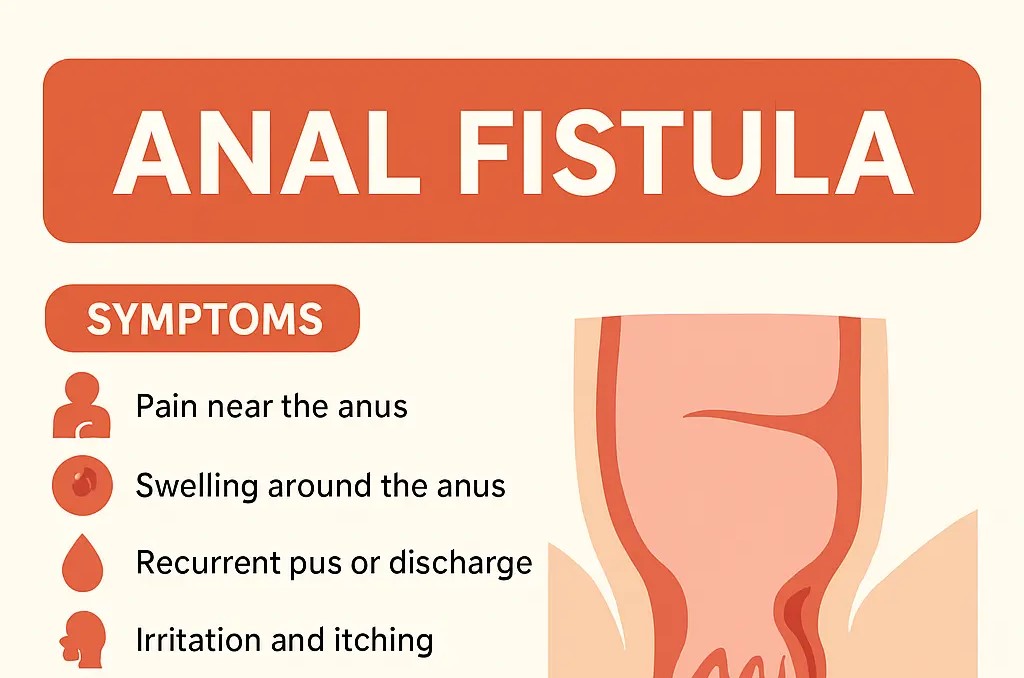
- Pain near the anus – especially while sitting or passing stool.
- Swelling around the anus.
- Recurrent pus or discharge (sometimes mixed with blood).
- Bad smell from discharge.
- Irritation and itching near the anus.
- Fever or fatigue (if infection is present).
- Lump or boil-like swelling around the anus that doesn’t heal.
👉 If you notice these symptoms, you should consult a doctor immediately.
What is the Causes of Anal Fistula?
The main cause of anal fistula is infection in the anal glands. When the infection leads to an abscess, it can develop into a fistula.
Other possible causes include:
- Chronic constipation or passing hard stools.
- Inflammatory bowel disease (IBD) such as Crohn’s disease.
- Tuberculosis (TB).
- Sexually transmitted infections (STIs).
- Trauma or injury near the anus.
- Previous surgery or untreated abscess.
Read More: Alkaptonuria Symptoms, Causes, Diagnosis, Treatment & FAQ
Complications of Anal Fistula
If an anal fistula is ignored, it can cause several complications, such as:
- Repeated infections.
- Severe pain and swelling.
- Abscess formation.
- Leakage of pus and bad odor.
- In rare cases, anal cancer (chronic untreated fistula).
That’s why timely diagnosis and treatment are very important.
Diagnosis of Anal Fistula
Doctors usually diagnose anal fistula using the following methods:
- Physical examination – The doctor will check the anus and surrounding skin.
- Proctoscopy – A small instrument is used to look inside the anus.
- MRI or Ultrasound – To see the full path of the fistula.
- Blood tests – To check for infection.
Treatment of Anal Fistula
Unfortunately, anal fistula does not heal on its own. In most cases, surgery is the only permanent solution. However, treatment depends on the type and severity of the fistula.
1. Home Remedies (Temporary Relief)
These remedies cannot cure fistula but may give relief:
- Warm sitz baths.
- Eating high-fiber diet to prevent constipation.
- Drinking more water.
- Using stool softeners.
- Keeping the anal area clean.
2. Medical Treatment
Doctors may prescribe antibiotics and painkillers, but these only control infection and pain, not cure the fistula.
3. Surgical Treatments (Permanent Cure)
There are different types of surgeries for anal fistula:
- Fistulotomy – The most common surgery where the fistula is opened and allowed to heal naturally.
- Seton placement – A surgical thread is placed to help drain infection.
- LIFT procedure (Ligation of Intersphincteric Fistula Tract) – Modern surgery with less risk of incontinence.
- Fibrin glue or plug – A non-surgical method but not always successful.
- Laser surgery – Minimally invasive and quicker recovery.
Read More: Alzheimer’s Disease: Symptoms, Causes, Diagnosis, Treatment, and Prevention
Anal Fistula Surgery Cost in India
The cost of anal fistula surgery depends on the hospital, city, type of surgery, and doctor’s experience. On average:
- Government hospitals: ₹20,000 – ₹40,000
- Private hospitals: ₹40,000 – ₹1,20,000
- Laser surgery: ₹70,000 – ₹1,50,000
Insurance may cover fistula surgery depending on the policy.
Prevention of Anal Fistula
Although not all cases can be prevented, you can reduce the risk by:
- Maintaining good anal hygiene.
- Eating a high-fiber diet.
- Drinking enough water daily.
- Avoiding constipation and straining.
- Treating anal abscess quickly.
- Regular medical checkups if you have Crohn’s disease or TB.
What Does an Anal Fistula Look Like?
Many patients search for “anal fistula pictures” to understand what it looks like. An anal fistula usually looks like:
- A small opening or hole near the anus.
- Redness, swelling, or pus discharge from the opening.
- Sometimes a lump that bursts and leaks fluid.
For medical safety, you should always confirm with a doctor instead of relying only on pictures.
Read More: Alcohol Misuse: Risks, Treatment, Symptoms, Types, Causes
FAQs on Anal Fistula
Q1. How serious is a fistula?
Ans: Yes, it is serious if ignored. It can lead to repeated infections, severe pain, and in rare cases, cancer.
Q2. Can anal fistula heal without surgery?
Ans: No, in most cases surgery is needed. Home remedies only give temporary relief.
Q3. How long does anal fistula surgery take to heal?
Ans: Healing time is usually 4–6 weeks depending on the type of surgery.
Q4. Is anal fistula surgery painful?
Ans: Some pain is normal after surgery, but it can be managed with medicines and proper care.
Q5. What foods are good for fistula patients?
Ans: Fiber-rich foods like fruits, vegetables, whole grains, and plenty of water help. Avoid spicy and oily foods.
Conclusion
An anal fistula is a painful and recurring condition that should not be ignored. With timely diagnosis and proper surgery, it can be completely cured.