What Is Atopic Eczema?
Atopic eczema, also called atopic dermatitis, is a long-lasting skin condition that causes dry, itchy, and inflamed patches.
It isn’t contagious, but it can make skin uncomfortable and affect confidence.
Worldwide, about 15–20% of children and 3–10% of adults experience it.
Table of Contents
Quick Facts & Statistics
| Fact | Details |
|---|---|
| Global prevalence | Around 230 million people |
| Common age of onset | Before age 5, but adults can develop it |
| Major triggers | Dry air, allergens, stress |
| Remission | Many children improve by their teens |
Symptoms of Atopic Eczema
- Intense itching, especially at night
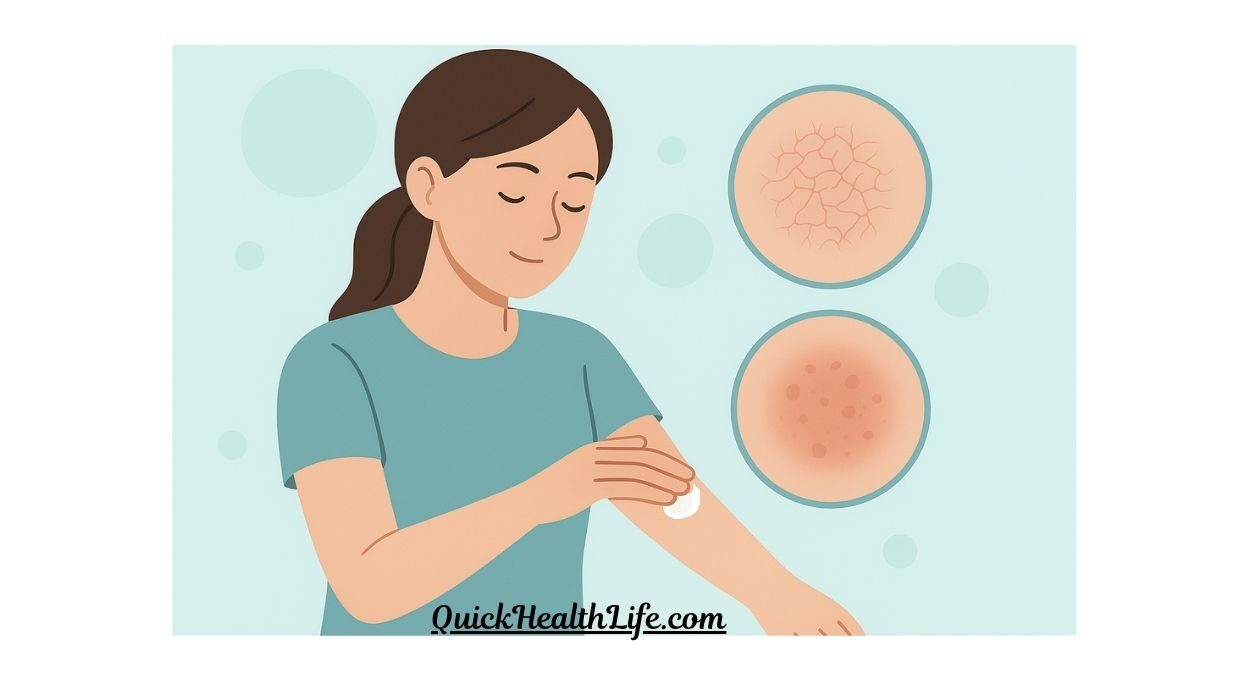
- Red or brown-gray patches
- Dry, cracked skin
- Small, raised bumps that may leak fluid
Signs in Babies & Children
In infants, rashes often appear on the face, scalp, and elbows. Scratching can lead to infection.
Symptoms in Adults
Adults may have thicker, scaly skin—often on hands, eyelids, or the backs of knees.
Causes & Risk Factors
Scientists believe atopic eczema is the result of:
- Genetics: A family history of eczema, asthma, or hay fever raises risk.
- Immune system imbalance: The skin overreacts to irritants.
- Skin barrier defects: The skin loses moisture more easily.
Common Triggers
Dry climates, pet dander, certain soaps, emotional stress, and foods like dairy or eggs can set off flare-ups.
Types of Eczema
While “eczema” is a general term, here are the main types:
| Type | Key Feature |
|---|---|
| Atopic dermatitis | Chronic, itchy inflammation |
| Contact dermatitis | Reaction to irritants/allergens |
| Nummular eczema | Coin-shaped patches |
| Dyshidrotic eczema | Tiny blisters on hands/feet |
| Seborrheic dermatitis | Oily, scaly patches (often on scalp) |
| Stasis dermatitis | Poor leg circulation–related |
Atopic Dermatitis vs. Eczema
Think of eczema as the big umbrella.
Atopic dermatitis is the most common type under that umbrella.
| Feature | Eczema (general) | Atopic Dermatitis |
|---|---|---|
| Meaning | Broad group of conditions | Specific chronic form |
| Cause | Varies | Genetic + immune factors |
How Doctors Diagnose Atopic Eczema
Doctors usually rely on:
- Medical history – family allergies, past rashes
- Physical exam – pattern and location of patches
- Allergy or patch testing – to identify triggers
There’s no single lab test, so a detailed exam is key.
Treatment
Successful treatment focuses on moisturizing and calming inflammation.
Best Over-the-Counter Creams
- Fragrance-free moisturizers
- Thick ointments like petrolatum jelly
- Ceramide-rich lotions
Prescription Medications
- Topical corticosteroids reduce swelling
- Calcineurin inhibitors (e.g., tacrolimus) control immune response
- JAK inhibitors or biologics for severe cases
Lifestyle & Home Remedies
Follow the 3-minute rule:
Apply moisturizer within three minutes of bathing to lock in moisture.
Wear cotton clothes, use mild soap, and keep room humidity stable.
Can Eczema Be Cured Permanently?
Right now, there’s no permanent cure, but many people go into long periods of remission.
Researchers are exploring targeted biologic drugs that might one day change that.
Complications to Watch For
- Skin infections from scratching
- Sleep problems due to itching
- Anxiety or depression linked to visible rashes
Prevention & Daily Care Tips
- Moisturize at least twice a day
- Take short, lukewarm showers
- Avoid harsh detergents
- Manage stress through yoga or meditation
Living Positively with Atopic Eczema
With consistent care and smart lifestyle choices, most people can control flare-ups and live confidently.
Support groups and tele-dermatology visits make management easier than ever.
FAQs About Atopic Eczema
1. What is the best treatment for eczema?
A combination of regular moisturizing and, when needed, topical corticosteroids or calcineurin inhibitors works best. Severe cases may require biologic therapy under a doctor’s supervision.
2. What is the 3-minute rule for eczema?
Moisturize within three minutes of bathing or showering to trap water in the skin and reduce dryness.
3. What causes atopic eczema to flare?
Common triggers include dry air, allergens, stress, and harsh soaps.
4. Does atopic eczema ever go away?
Many children outgrow it by their teens, but some people continue to have flare-ups as adults.
5. Are there foods that make eczema worse?
Some people react to dairy, eggs, nuts, or gluten, but triggers vary. Always talk to a doctor before cutting foods.
6. How can I prevent nighttime itching?
Keep your room cool, moisturize before bed, and wear soft cotton sleepwear.
Conclusion
As someone who has researched and written about health for years, I’ve seen how knowledge and consistent care can transform life with atopic eczema.