What is a Baker’s Cyst?
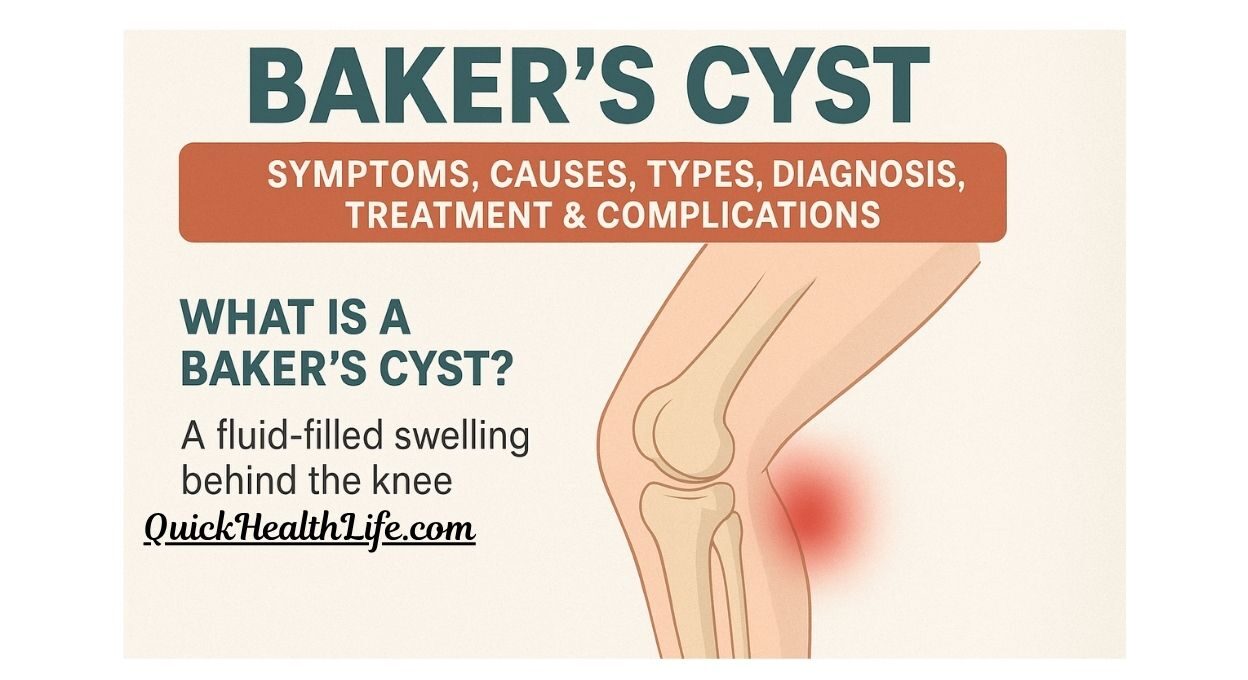
A Baker’s cyst (also called a popliteal cyst) is a fluid-filled swelling that forms behind your knee. It develops when excess synovial fluid (the fluid that lubricates your knee joint) builds up, causing a lump that can feel tight and uncomfortable.
Although it looks scary, it’s usually not life-threatening. But it may indicate an underlying knee problem like arthritis or a meniscus tear.
Table of Contents
Why is it Called a Baker’s Cyst?
It’s named after Dr. William Morrant Baker, a British surgeon who first described it in the 19th century. That’s why you’ll hear it called “Baker’s cyst”, though medically, it’s known as a popliteal cyst.
Symptoms
Common Symptoms
- Lump or swelling behind the knee
- Tightness in the knee joint
- Pain that worsens when bending or straightening the knee
- Stiffness, especially after sitting for long hours
Severe Symptoms That Need Medical Care
- Sudden, sharp pain behind the knee
- Swelling spreading to the calf
- Redness and warmth (could mimic a blood clot)
- Difficulty walking or bending the leg
Causes of a Baker’s Cyst
What is the Main Cause of Baker’s Cyst?
The main cause is the overproduction of synovial fluid, often due to:
- Knee arthritis (osteoarthritis, rheumatoid arthritis)
- Meniscus tears
- Knee injuries
- Inflammation
Conditions Linked with Baker’s Cyst
- Osteoarthritis
- Rheumatoid arthritis
- Gout
- Cartilage damage
Types of Baker’s Cyst
Simple Baker’s Cyst
- Small and usually painless
- May go away on its own
Complex Baker’s Cyst
- Larger, painful, and linked to knee damage
- Requires medical attention
Diagnosis of Baker’s Cyst
Baker’s Cyst Radiology
Doctors use ultrasound or MRI scans to confirm a cyst and rule out more serious issues like tumors or blood clots.
Baker’s Cyst Orthobullets Reference
According to Orthobullets, diagnosis often involves:
- Clinical examination
- Ultrasound or MRI
- Checking underlying knee conditions
Treatment
Home Remedies and Lifestyle Changes
- Rest your knee
- Apply ice packs
- Use a compression bandage
- Elevate your leg
- Gentle stretching
Medical Treatments
- Medication: Pain relievers and anti-inflammatories
- Aspiration: Doctor drains the fluid with a needle
- Corticosteroid injections to reduce inflammation
- Surgery if underlying cause needs correction
What Not to Do with a Baker’s Cyst
- Don’t over-exercise or put heavy stress on the knee
- Avoid sitting in one position for too long
- Don’t ignore severe pain or swelling
How to Shrink a Baker’s Cyst Naturally?
- Warm compresses to ease stiffness
- Gentle yoga and low-impact exercises
- Anti-inflammatory diet (turmeric, ginger, omega-3 foods)
- Drinking enough water to support joint health
Complications of Baker’s Cyst
If left untreated, a Baker’s cyst may:
- Burst, causing sharp pain and swelling in the calf
- Lead to chronic knee stiffness
- Cause walking difficulties
- Mimic symptoms of a deep vein thrombosis (DVT), which can be dangerous
How to Sleep with a Baker’s Cyst?
- Sleep with a pillow under your knee
- Avoid lying directly on the affected leg
- Use ice therapy before bedtime
- Keep your leg slightly elevated
When to See a Doctor?
Seek medical help if you have:
- Sudden pain in the knee or calf
- Redness and warmth
- Persistent swelling
- Difficulty moving your leg
FAQs
1. What is the main cause of Baker’s cyst?
The main cause is excess synovial fluid, often triggered by arthritis, meniscus tears, or knee injuries.
2. What is the best treatment for Baker’s cyst?
The best treatment depends on the cause. Rest, ice, compression, and elevation help. Severe cases may need fluid drainage or surgery.
3. What happens if Baker’s cyst is left untreated?
It may burst, spread fluid into the calf, and mimic a blood clot, causing pain and swelling.
4. How to shrink a Baker’s cyst naturally?
Apply warm compresses, practice gentle stretching, and follow an anti-inflammatory diet.
5. How to tell if the lump is not a Baker’s cyst?
If the lump is hard, grows rapidly, or doesn’t respond to rest, it might be something else. Always get it checked.
6. Can children get a Baker’s cyst?
Yes, but it’s less common. In kids, cysts often go away on their own.
Conclusion
A Baker’s cyst is a common knee condition that can cause swelling, pain, and discomfort. While many cases improve with rest and lifestyle changes, some may require medical treatments like aspiration, injections, or surgery.