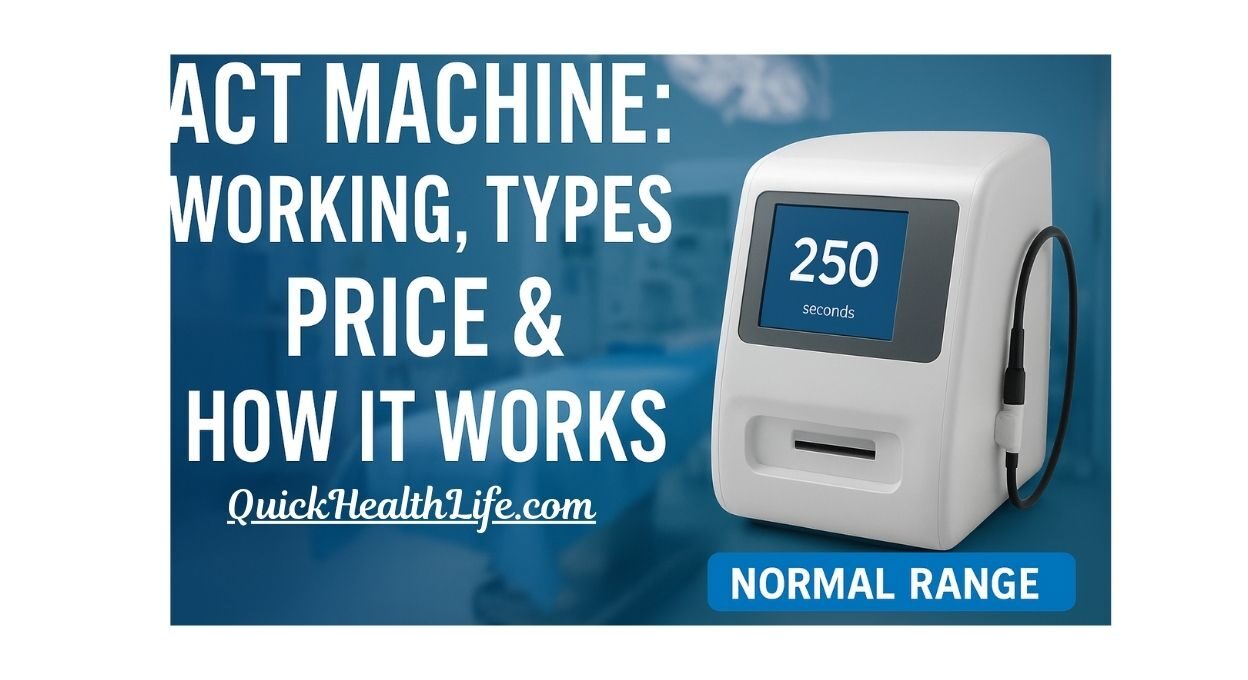
What is an ACT Machine?
An ACT Machine is a medical device used to measure the Activated Clotting Time (ACT) in patients. This test is crucial for monitoring the effectiveness of anticoagulants, particularly heparin, during procedures like cardiac surgery and catheterization. The machine helps doctors decide the right dosage of blood thinners, ensuring patients are safe from both clotting and excessive bleeding.
Full Form of ACT Machine
The full form of ACT is Activated Clotting Time.
So, the ACT Machine is essentially a blood clotting time measurement device.
Table of Contents
Importance of ACT Machine in Healthcare
Why is the ACT Machine so important? Because in critical surgeries like open-heart surgery or procedures done in the cath lab, doctors need to strike a balance between preventing clots and avoiding too much bleeding. Without real-time ACT results, managing this balance would be extremely risky.
Key roles include:
- Monitoring heparin therapy.
- Ensuring patient safety during cardiac surgery.
- Reducing risk of thrombosis (clot formation).
- Guiding anticoagulant dosage in cath labs.
ACT Machine Working Principle
The working principle of an ACT machine is simple yet highly effective:
- Blood Sample Collection – A small amount of blood is drawn from the patient.
- Activation – The machine uses an activator like kaolin or celite to stimulate clotting.
- Monitoring – The device monitors the time taken for clot formation.
- Result Display – The ACT is displayed in seconds, guiding doctors in real time.
Role of ACT in Cardiac Surgery
During open-heart surgery, patients are put on high doses of heparin. The ACT machine helps surgeons decide when the blood is thin enough for surgery and when to reverse heparin at the end.
ACT in Cath Lab
In cath labs, ACT machines guide cardiologists during angioplasty and stent placement, ensuring patients remain safe from both clotting and bleeding risks.
Types of ACT Machines
Manual ACT Machines
- Traditional method.
- Requires manual handling of samples.
- Less common now.
Semi-Automated ACT Machines
- Partly automated.
- Better accuracy and faster results.
Fully Automated ACT Machines
- Widely used in modern hospitals.
- User-friendly with touchscreens.
- Provide instant results with minimal human effort.
ACT Machine Manufacturers
Several leading companies manufacture ACT machines:
- Helena Laboratories (Helena ACT Machine).
- Medtronic (Medtronic ACT Machine).
- Hemochron® Systems.
- Siemens Healthcare.
ACT Machine Use in Daily Practice
- Cardiac surgeries.
- Cath labs for stent placement.
- Dialysis centers.
- Blood thinner monitoring.
ACT Machine Price in India & Globally
- India: ₹2,00,000 – ₹6,00,000 depending on brand and features.
- USA/Europe: $5,000 – $12,000.
- Disposable ACT cartridges also add to recurring cost.
ACT Machine Normal Range
- Normal ACT (without heparin): 70 – 120 seconds.
- During surgery (with heparin): 400 – 480 seconds.
ACT Machine vs ABG Machine
- ACT Machine – Measures clotting time.
- ABG Machine – Measures blood gases (oxygen, CO2, pH).
Both are critical in operation theatres but serve different purposes.
How to Operate an ACT Machine?
- Collect patient’s blood sample.
- Insert cartridge into the machine.
- Wait for machine activation.
- Machine displays ACT value.
- Doctor adjusts medication accordingly.
Helena ACT Machine
Helena Laboratories is a well-known manufacturer of reliable ACT machines. Their machines are widely used for consistent performance in operation theatres.
Medtronic ACT Machine
Medtronic offers advanced ACT systems that are highly accurate, making them a trusted choice in cardiac surgery centers worldwide.
Advantages of ACT Machines
- Quick results.
- Reduces surgical risks.
- Portable and easy to use.
- Improves patient outcomes.
Limitations & Challenges
- Requires disposable cartridges, which increase cost.
- Some models are expensive.
- Not effective for patients with clotting disorders outside standard heparin monitoring.
FAQs
1. What is the use of ACT Machine?
It measures Activated Clotting Time, mainly used during surgeries to monitor heparin therapy.
2. What is the ACT in cardiac surgery?
It guides doctors to maintain safe levels of anticoagulation during surgery.
3. What does ACT stand for in cath lab?
In cath labs, ACT stands for Activated Clotting Time, ensuring patient safety during stent placement or angioplasty.
4. How does an ACT Machine work?
It measures the time taken for a blood sample to clot after activation using agents like kaolin or celite.
5. What is the normal ACT range?
The normal range is 70 – 120 seconds without heparin, and 400 – 480 seconds with heparin during surgery.
6. What is the ACT Machine price in India?
It ranges between ₹2–6 lakhs, depending on the brand and automation level.
Conclusion
The ACT Machine is an essential device in modern healthcare, especially in cardiac surgery and cath labs. It ensures patients are safe during procedures by monitoring blood clotting in real time. With options ranging from manual to fully automated machines, and trusted manufacturers like Helena and Medtronic, ACT machines are revolutionizing surgical safety.