1. What is a Benign Brain Tumour?
A benign brain tumour is a non-cancerous growth of abnormal cells inside the brain. Unlike cancerous (malignant) tumours, benign tumours don’t spread to other parts of the body.
However, because the brain is inside a closed skull, even a small growth can press on important brain areas and cause problems.
These tumours usually grow slowly and can often be removed successfully through surgery.
2. Benign vs Malignant Brain Tumours
Understanding the difference is important.
| Feature | Benign Brain Tumour | Malignant Brain Tumour |
|---|---|---|
| Growth Rate | Slow | Fast |
| Spread | Does not spread | Spreads to other parts |
| Cancerous? | No | Yes |
| Treatment Outcome | Often successful | More complex |
| Recurrence | Rare | Common |
| Examples | Meningioma, Pituitary adenoma | Glioblastoma, Astrocytoma |
So, while benign tumours are not cancerous, they still need medical attention.
3. Symptoms of Benign Brain Tumours
The symptoms depend on the tumour’s size, type, and location.
Here are the most common non-cancerous brain tumour symptoms:
General Symptoms
- Persistent headaches (especially in the morning)
- Nausea and vomiting
- Blurred or double vision
- Seizures
- Fatigue or weakness
- Difficulty in speaking or understanding
Specific Symptoms (Depending on Area Affected)
- Frontal lobe: Personality changes, poor decision-making
- Temporal lobe: Memory problems, confusion
- Cerebellum: Loss of balance, dizziness
- Pituitary gland: Hormonal imbalance, vision issues
If you’re wondering how I knew I had a brain tumour, many patients report chronic headaches, sudden vision problems, or seizures as early warning signs.
4. Causes and Risk Factors
Doctors don’t always know what exactly causes benign brain tumours, but research points to several possible risk factors:
- Genetic mutations: Inherited conditions like Neurofibromatosis type 2 can increase risk.
- Radiation exposure: Previous head radiation treatments.
- Family history: Having relatives with brain tumours.
- Hormonal changes: Especially in pituitary tumours.
- Age: Risk increases with age, especially after 40.
- Environmental factors: Long-term exposure to certain chemicals or radiation sources.
However, lifestyle factors like diet or stress are not directly linked to benign brain tumour formation.
5. Types of Benign Brain Tumours
There are several benign brain tumour types, depending on the cell or tissue involved.
a. Meningioma
- Originates from the membranes covering the brain.
- Most common benign brain tumour.
- More common in women.
b. Pituitary Adenoma
- Starts in the pituitary gland.
- Affects hormone production.
- Can cause vision and growth problems.
c. Acoustic Neuroma (Vestibular Schwannoma)
- Affects the nerve connecting ear to brain.
- Causes hearing loss, dizziness, and ringing in the ear.
d. Craniopharyngioma
- Develops near the pituitary gland.
- Common in children and older adults.
e. Hemangioblastoma
- Grows from blood vessel cells.
- May occur with genetic disorders.
6. How Benign Brain Tumours Are Diagnosed?
Early diagnosis can improve recovery chances significantly.
Doctors use several tests to detect and evaluate a tumour:
Step 1: Physical and Neurological Exam
- Tests reflexes, balance, vision, and hearing.
Step 2: Imaging Tests
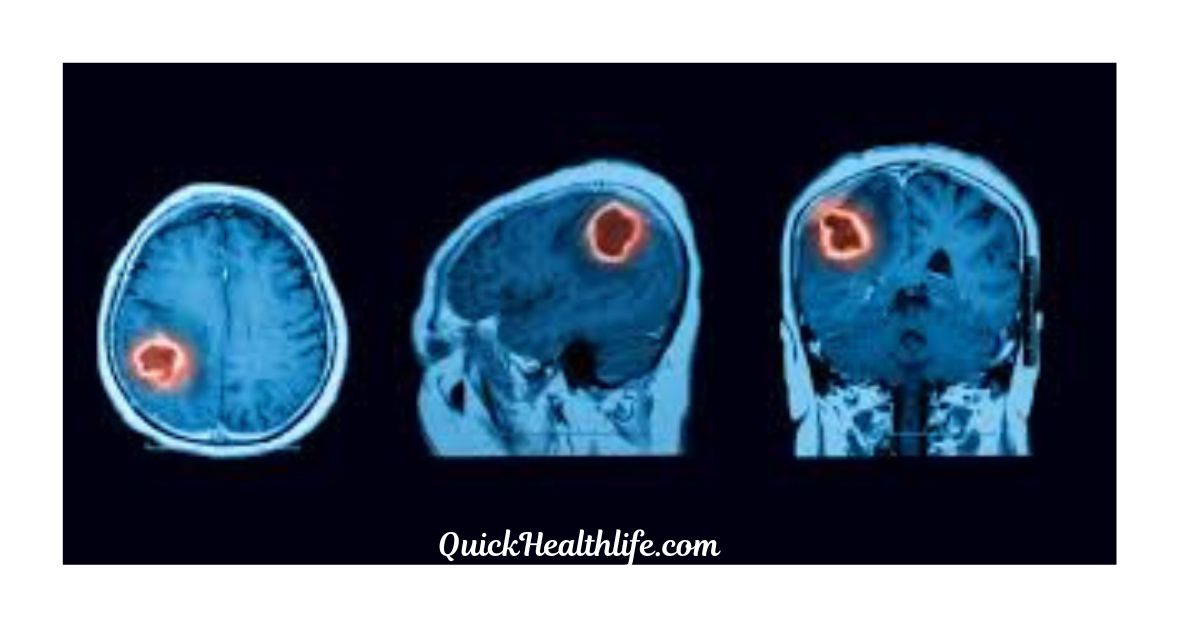
- MRI (Magnetic Resonance Imaging): Most detailed view of the brain.
- CT Scan: Helps detect calcified or large tumours.
Step 3: Biopsy
- A small tissue sample is tested to confirm if the tumour is benign or malignant.
Step 4: Hormonal and Blood Tests
- Especially for pituitary adenomas.
7. Treatment Options for Benign Brain Tumours
Treatment depends on tumour size, location, and patient’s health. The main goal is to remove or shrink the tumour while protecting brain function.
a. Watchful Waiting (Observation)
If the tumour is small and not causing symptoms, doctors may monitor it with regular MRIs.
b. Surgery
The most common and effective treatment.
Modern techniques allow surgeons to remove tumours with minimal brain damage.
c. Radiation Therapy
Used if surgery can’t remove all tumour cells. Focused radiation targets remaining growth.
d. Medications
Steroids help reduce swelling. Anti-seizure drugs control seizures.
8. Surgery for Benign Brain Tumours
Surgery is often the first-line treatment.
The goal is to remove the tumour completely while keeping brain function intact.
Common surgical procedures:
- Craniotomy: Opening the skull to remove the tumour.
- Endoscopic Surgery: Uses small instruments through the nose (for pituitary tumours).
Modern surgeries are safe, and patients can often return home within days.
9. Radiation Therapy and Medications
If surgery isn’t possible, radiation therapy helps control tumour growth.
Types include:
- Stereotactic radiosurgery (Gamma Knife or CyberKnife): Precise radiation beams.
- External beam radiation therapy: Broader area treatment.
Medications like dexamethasone reduce swelling, while hormone therapy is used for pituitary adenomas.
10. Recovery and Rehabilitation
After treatment, recovery involves:
- Physical therapy for mobility.
- Speech therapy for communication.
- Occupational therapy for daily skills.
Full recovery depends on tumour location and overall health. Emotional support and counselling are equally important.
11. Complications of Benign Brain Tumours
While most cases recover well, some complications can occur:
- Recurrence of tumour
- Memory loss
- Hormonal imbalance
- Seizures
- Vision problems
- Weakness or paralysis (rare)
Always follow up with your doctor regularly for MRI scans and checkups.
12. Prognosis and Survival Rate
The non-cancerous brain tumour survival rate is very high, often over 90% after successful treatment.
Life Expectancy
Many people live normal, long lives after treatment.
However, survival depends on:
- Tumour type
- Size and location
- Surgical success
So yes, a benign brain tumour can be serious but is often treatable with early detection.
13. Prevention and Lifestyle Tips
There’s no guaranteed way to prevent brain tumours, but you can reduce risk by:
- Avoiding radiation exposure
- Eating a balanced diet rich in antioxidants
- Managing stress
- Avoiding tobacco and alcohol
- Regular health checkups, especially with family history
14. Frequently Asked Questions (FAQs)
1. Is a benign brain tumour serious?
Yes. Even though it’s non-cancerous, it can press on important brain parts and cause symptoms.
2. What causes a benign brain tumour?
Genetic factors, radiation exposure, and certain inherited conditions.
3. Can a benign brain tumour kill you?
Rarely, but large untreated tumours can cause life-threatening pressure inside the brain.
4. What is the survival rate for benign brain tumours?
Over 90% with proper treatment.
5. Can a benign tumour turn cancerous?
It’s rare, but some tumours can become malignant over time.
6. How long can you live with a benign brain tumour?
Many people live for decades, especially if treated early.
7. How to check sugar at home with glucometer?
Use a blood glucose monitor, insert a strip, prick your finger, and apply the drop of blood on the strip.