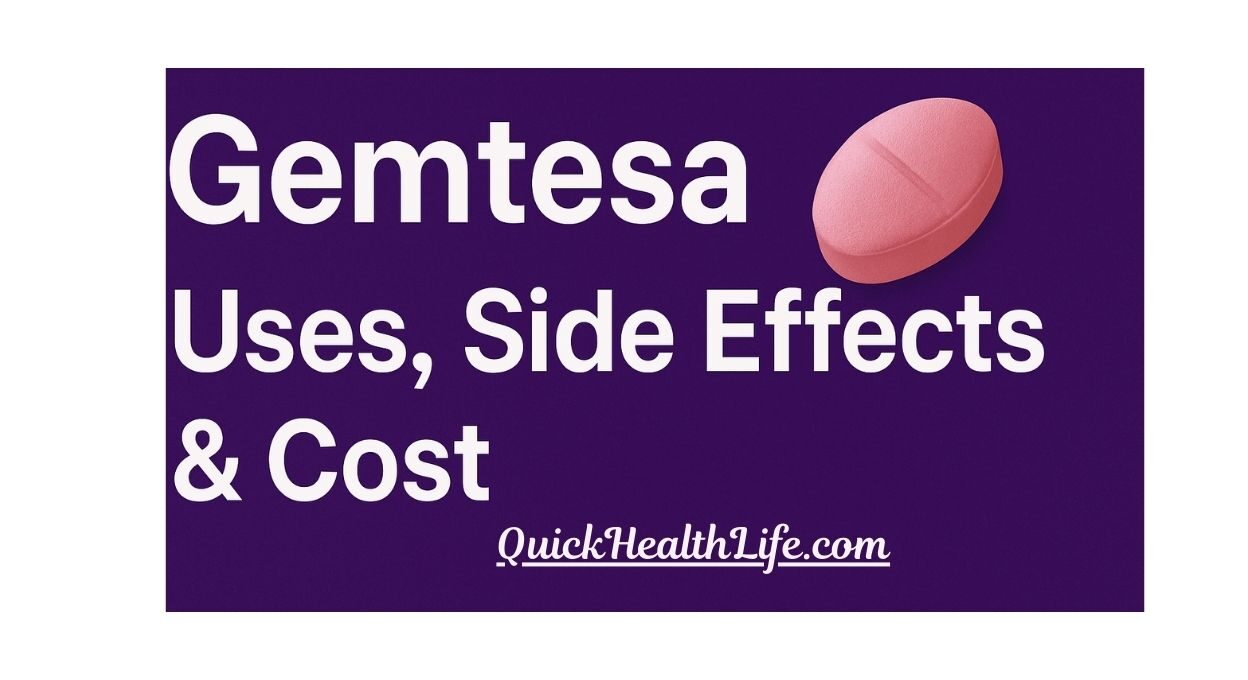
What is Gemtesa?
Gemtesa (generic name: vibegron) is a prescription medication approved by the FDA for the treatment of overactive bladder (OAB) with symptoms such as:
- Sudden urge to urinate
- Frequent urination
- Leakage (urge urinary incontinence)
Gemtesa belongs to a class of drugs called beta-3 adrenergic agonists. It helps relax the bladder muscles, allowing the bladder to hold more urine and reducing sudden urges.
Table of Contents
Gemtesa Uses
Doctors prescribe Gemtesa for:
- Overactive bladder (OAB) in adults
- Urgency and frequency of urination
- Urinary incontinence (leakage)
- Better quality of life by reducing bathroom trips
In short: Gemtesa gives people with OAB better bladder control and fewer disruptions in daily life.
Mechanism of Action
- Gemtesa works by activating beta-3 adrenergic receptors in the bladder wall.
- This causes the bladder muscles to relax.
- The bladder can then store more urine before the urge to urinate kicks in.
Unlike some older OAB medicines, Gemtesa does not block acetylcholine, so it generally has fewer side effects like dry mouth or constipation.
Dosage
- Recommended dose: 75 mg tablet once daily
- Can be taken with or without food
- Swallow whole, don’t crush or chew
- Best taken at the same time every day
Some patients ask: “What is the best time of day to take Gemtesa?”
Answer: You can take it morning or evening, but consistency matters. Choose a time that fits your routine.
Gemtesa Side Effects
Like all medicines, Gemtesa may cause side effects.
Common side effects:
- Headache
- Cold symptoms (runny or stuffy nose, sore throat)
- Diarrhea
- Nausea
Less common but serious side effects:
- High blood pressure
- Urinary retention (trouble emptying bladder fully)
- Allergic reactions (rash, swelling, breathing issues – rare)
If you notice trouble urinating or chest pain, contact your doctor immediately.
Warnings & Precautions
Before taking Gemtesa, inform your doctor if you have:
- Severe liver or kidney problems
- High blood pressure (uncontrolled)
- Urinary retention issues
- History of bladder obstruction
Pregnancy & breastfeeding: Safety is not well studied. Consult your doctor before use.
Interactions
Gemtesa can interact with other medicines. Key interactions include:
- Digoxin (heart medicine): Gemtesa may increase its level.
- Certain antihypertensives (blood pressure medicines): monitor carefully.
- Other bladder medications: using multiple bladder relaxants together can increase side effects.
Always share your full medication list with your doctor.
Gemtesa Cost
Gemtesa is a brand-only medication (no generic available as of 2025).
- In the USA, the average cost is $450 – $550 per month without insurance.
- With insurance or coupons, cost can drop to $0 – $50 per month.
- In India, Gemtesa is not widely available yet; patients may use alternatives like Mirabegron (Myrbetriq).
Gemtesa Alternatives
Some common alternatives include:
- Myrbetriq (mirabegron): another beta-3 agonist, similar function
- Oxybutynin, Tolterodine, Solifenacin: older OAB medicines (antimuscarinics)
- Lifestyle changes: fluid management, bladder training, pelvic floor exercises
Gemtesa vs Myrbetriq
| Feature | Gemtesa | Myrbetriq |
|---|---|---|
| Generic Name | Vibegron | Mirabegron |
| FDA Approval | 2020 | 2012 |
| Dose | 75 mg daily | 25–50 mg daily |
| Side Effects | Headache, cold symptoms | High BP, UTI, constipation |
| Cost | Higher ($450+) | Slightly lower ($350–450) |
| Best For | Fewer drug interactions | Widely available |
FAQ About Gemtesa
1. What is Gemtesa used for?
Gemtesa is used for treating overactive bladder (OAB), reducing urgency, frequency, and leakage.
2. What are the problems with Gemtesa?
The main problems are cost, availability, and side effects like headache or high blood pressure.
3. Is Gemtesa an expensive drug?
Yes, without insurance it can cost $450–$550 per month in the USA.
4. What is the best time of day to take Gemtesa?
Any time, but be consistent. Many prefer morning after breakfast.
5. Can Gemtesa be taken with other bladder medications?
It depends. Combining with other bladder relaxants increases risk of urinary retention. Always ask your doctor.
6. Is there a generic for Gemtesa?
No. As of 2025, Gemtesa is only available as a brand-name drug.