ETCO2 module is one of the most important parts of modern patient monitoring systems in hospitals and emergency care units. It is widely used in ICUs, operation theatres, ambulances, and critical care environments to measure how well a patient is breathing.
ETCO2 stands for End-Tidal Carbon Dioxide, which simply means the amount of carbon dioxide a patient exhales at the end of breathing. This value helps doctors understand how well the lungs are working and whether oxygen and ventilation are proper.
Table of Contents
What is ETCO2 Module?
The ETCO2 module is a medical device component used in patient monitors to measure carbon dioxide levels in exhaled air.
It is mainly used in:
- ICUs
- Operation theatres
- Emergency rooms
- Ambulances
- Ventilator setups
This module helps doctors understand if a patient is breathing properly or facing respiratory issues.
In simple terms, ETCO2 is like a “breathing performance checker” for patients.
ETCO2 Working Principle (How It Works)
The working of ETCO2 module is based on measuring carbon dioxide concentration in exhaled breath.
How it works step by step:
- Patient exhales air
- Air passes through ETCO2 sensor
- Infrared light detects CO2 levels
- Sensor converts data into digital signal
- Monitor displays ETCO2 value and waveform
The module uses infrared absorption technology, because carbon dioxide absorbs infrared light at a specific wavelength.
👉 More CO2 = more light absorption
👉 Less CO2 = less absorption
This is how the device calculates breathing efficiency.
Types of ETCO2 Module
There are two main types of ETCO2 monitoring systems used in hospitals.
1. Mainstream ETCO2 Module
In this type:
- Sensor is placed directly on airway tube
- No gas sample is taken out
- Faster and more accurate readings
✔ Best for ventilated patients
✔ Used in operation theatres
2. Sidestream ETCO2 Module
In this type:
- Small sample of breath is drawn into machine
- Sensor is inside monitor
- Slight delay in reading
✔ Used in ICU and emergency cases
✔ Works for both intubated and non-intubated patients
ETCO2 Monitor and Its Uses
ETCO2 monitor is the device that displays carbon dioxide levels in real time.
Doctors use it for:
- Checking breathing status
- Monitoring anesthesia
- Detecting respiratory failure
- CPR monitoring
- Ventilator adjustment
It is considered a life-saving monitoring tool in critical care.
ETCO2 Normal Range
The normal ETCO2 range is:
👉 35 mmHg to 45 mmHg
Meaning:
- Below 35 mmHg → Hyperventilation (fast breathing)
- Above 45 mmHg → Hypoventilation (slow breathing)
If ETCO2 is abnormal, it may indicate:
- Lung disease
- Airway blockage
- Cardiac arrest
- Respiratory depression
ETCO2 Graph (Capnography Waveform)
ETCO2 graph is called capnography waveform.
It shows:
- CO2 level changes during breathing
- Inhalation and exhalation pattern
Waveform stages:
- Start of exhalation
- Rising CO2 level
- Peak (ETCO2 value)
- Return to baseline
Doctors use this graph to detect:
- Airway blockage
- Asthma
- Ventilator problems
ETCO2 How to Measure
ETCO2 measurement is simple when using modern monitors.
Steps:
- Connect ETCO2 sensor
- Attach airway or nasal cannula
- Start monitor
- Observe waveform and value
- Record readings
It gives real-time breathing status instantly.
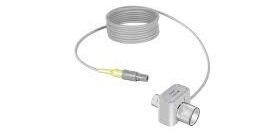
ETCO2 Cable and Accessories
ETCO2 system includes:
- ETCO2 cable
- Airway adapter
- Nasal cannula
- Filter line
- Sensor module
These accessories ensure accurate gas sampling and measurement.
ETCO2 Module Philips Overview
Philips ETCO2 modules are widely used in hospitals due to their:
- High accuracy
- Durable sensors
- Fast response time
They are compatible with Philips patient monitors and ICU systems.
Common features:
- Real-time waveform display
- Alarm system
- Multi-parameter integration
ETCO2 Module Mindray Overview
Mindray ETCO2 modules are also very popular in India and globally.
Features include:
- Cost-effective design
- Reliable performance
- Easy integration with monitors
Mindray is widely used in:
- Emergency units
- Mid-range hospitals
- Ambulance systems
ETCO2 Module Price in 2026
The price of ETCO2 modules depends on brand, type, and features.
Price Table
| Type | Price Range (Approx) |
|---|---|
| Basic Sidestream Module | ₹25,000 – ₹80,000 |
| Advanced Sidestream Module | ₹80,000 – ₹2,00,000 |
| Mainstream Module | ₹1,50,000 – ₹4,00,000 |
| Philips ETCO2 Module | ₹2,00,000 – ₹5,00,000 |
| Mindray ETCO2 Module | ₹1,00,000 – ₹3,00,000 |
Prices may vary based on hospital contracts and suppliers.
Advantages of ETCO2 Monitoring
ETCO2 monitoring provides many benefits:
- Real-time breathing analysis
- Early detection of respiratory failure
- Helps during CPR
- Improves anesthesia safety
- Non-invasive monitoring
It is one of the most reliable respiratory tools in critical care.
Limitations of ETCO2 Module
Even though it is very useful, ETCO2 has some limitations:
- Expensive equipment
- Requires proper calibration
- Affected by airway leaks
- Not always accurate in low perfusion cases
Clinical Applications of ETCO2
ETCO2 is used in:
- ICU patients
- Surgery monitoring
- Emergency resuscitation
- Ventilator management
- Asthma and COPD cases
It is a standard monitoring tool in modern hospitals.
ETCO2 and CPR Monitoring
During CPR:
- ETCO2 shows quality of chest compressions
- Higher ETCO2 = better blood circulation
- Sudden rise indicates return of heartbeat
Doctors rely heavily on ETCO2 during cardiac arrest cases.
ETCO2 vs Oxygen Monitoring
| Feature | ETCO2 | Oxygen Monitor |
|---|---|---|
| Measures | CO2 levels | Oxygen levels |
| Use | Breathing efficiency | Oxygen saturation |
| Speed | Real-time ventilation data | Oxygen status |
| Importance | Critical in emergencies | General monitoring |
Safety and Maintenance Tips
- Clean sensors regularly
- Avoid moisture damage
- Calibrate device periodically
- Replace damaged cables
Proper maintenance improves accuracy and lifespan.
FAQs
1. What is ETCO2 module used for?
It is used to measure carbon dioxide levels in exhaled breath for monitoring breathing.
2. What is normal ETCO2 range?
Normal range is 35–45 mmHg.
3. What is ETCO2 graph?
It is a waveform that shows CO2 levels during breathing.
4. What is ETCO2 module price?
It ranges from ₹25,000 to ₹5,00,000 depending on type and brand.
5. Which is better: Philips or Mindray ETCO2 module?
Both are reliable; Philips is high-end, while Mindray is cost-effective.